
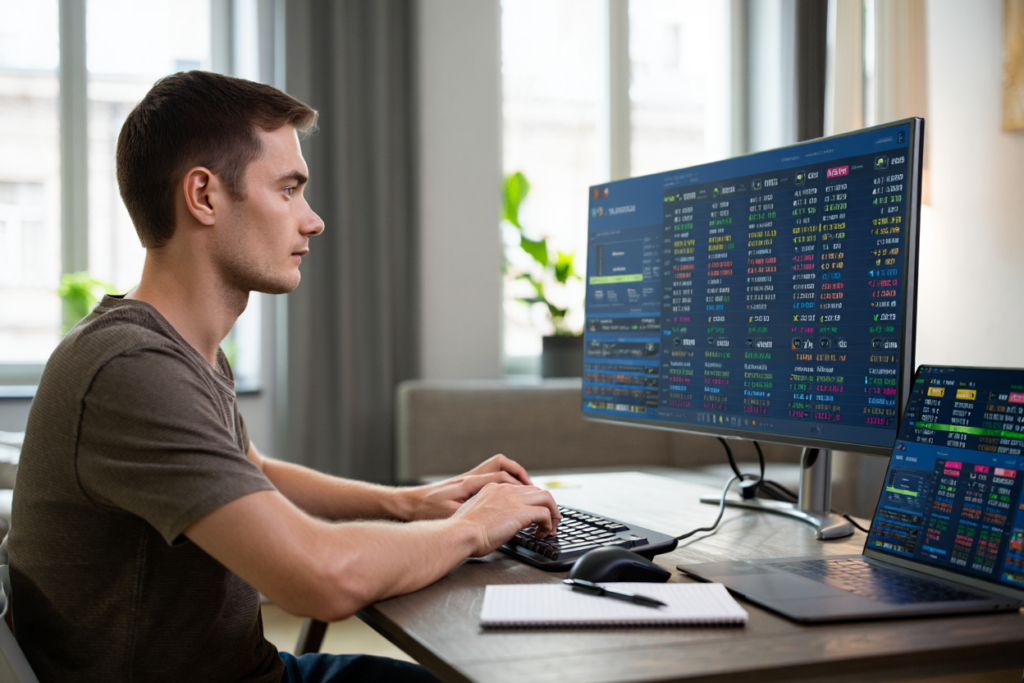
A sports betting simulator lets you practice placing wagers without risking real money. These platforms replicate actual betting conditions, showing you odds, potential payouts, and how different stake sizes affect your returns. The mechanics mirror real sportsbooks, allowing you to test strategies across various sports before committing funds.
Most simulators track your results over time, providing statistics on win rates, average odds taken, and return on investment. This data becomes invaluable for identifying patterns in your decision-making. If you consistently lose money betting on underdogs with odds above 3.0, the simulator reveals this weakness before it drains your bankroll.
The best simulators update odds in real-time, pulling data from major betting markets. DraftKings Sportsbook offers a free play mode for this reason. ESPN’s free sports betting games operate similarly, letting users compete against others using virtual currency. These platforms often feature leaderboards, turning practice into a competitive experience that maintains engagement.
Building Your Skills Through Simulation
Start by treating simulators as a learning laboratory, not entertainment. Set a specific goal: master line shopping (comparing odds across books), understand expected value calculations, or improve your ability to assess matchups on a particular sport.
Spend at least two weeks using a simulator before betting real money. This timeframe provides enough data to reveal whether your strategy works or if you’re relying on luck. Track every bet manually in a spreadsheet alongside the simulator’s records. Note why you selected certain odds, which factors influenced your decision, and what you’d change if making that bet again.
Paper trading forces discipline. Without financial consequences, many bettors abandon their strategy when a few losses occur. In simulation, losses teach you something concrete about your analysis process. You might discover you overweight recent team performance or ignore injury reports for key players.
Joining Active Sports Betting Communities
A sports betting group amplifies your learning by exposing you to how experienced bettors analyze games. Communities like Reddit’s r/sportsbook or Discord servers dedicated to betting discussion provide real-time perspectives from people evaluating the same matchups you are.
Quality communities enforce transparency about picks. Members post predictions alongside their reasoning, unit sizes, and historical records. This accountability weeds out noise. You can ignore someone claiming a “guaranteed winner” while following someone who wins 52% of bets consistently and explains their math.
Avoid groups that sell picks. Someone making money from selling predictions has a financial incentive to hype marginal information, not actually help your betting. Free communities where members share analysis without commission tend to offer more honest discussions about what works and what doesn’t.
Participate actively rather than passively consuming. Ask why someone favors a particular side. Challenge analysis respectfully. This interaction sharpens your own thinking. Communities also provide the human element missing from simulators, teaching you emotional discipline by letting you see how others handle losing streaks.
Using Simulators and Communities Together
The combination of simulation and community input creates a feedback loop. Test a strategy suggested in your betting group on a simulator first. If five experienced bettors recommend fading public money on underdogs, run that rule through simulated games for two weeks before implementing it with real money.
Community members can explain what simulators cannot. A simulator shows you that betting on teams coming off a bye week wins at a 53% rate. A community member might explain why: coaches use extra preparation time effectively, or sharp money always backs these situations, making line value disappear quickly. This context transforms raw data into strategy.
Post your simulator results in communities and ask for critique. Experienced bettors spot logical errors in your approach that you miss. Perhaps you’re selecting strong teams, but your unit sizing is backward, creating liability when favorites lose. Outside perspective identifies these mistakes faster than solo analysis.
Finding the Right Prompt for Sports Betting Analysis
When asking for advice in communities or using AI tools within simulators, specificity matters. Instead of “what should I bet on?” ask “team A is favored by 3.5 points on the road after losing their last three games by an average of 8 points; team B is home and just signed a backup quarterback. What am I missing in this matchup?” This prompt for sports betting guidance yields useful responses because it shows you’ve done preliminary work.
Many simulators now include AI prompts that analyze matchups based on your input. Feed the tool historical data about a team’s performance in similar situations, current injury status, and rest patterns. The simulator generates expected outcomes and identifies value if odds don’t match the projection. These prompts work best when you provide context rather than asking for pick recommendations.
Bet on the Nearest Sport Strategically
New bettors often focus on major leagues like the NFL or NBA because they’re popular. However, betting on the nearest sport you can watch live offers advantages. If college football games happen at your local university, watching matches live develops your eye for team dynamics and player talent in ways highlight reels cannot.
Local sports also have sharper market inefficiencies. Fewer sophisticated bettors follow regional teams, creating opportunities for value. A simulator reveals whether your live observation skills translate into profitable predictions. Test your picks on simulated versions of upcoming local games before spending real money.
Live attendance provides information missing from box scores. Crowd energy, field conditions, and coaching decisions visible only in person inform better predictions. Combine this observation with community discussions about the same games to validate whether your impressions match professional analysis.
Managing Risk While Learning
Use simulators to establish your risk tolerance. If paper trading with virtual units of 1-10% of a pretend bankroll stresses you, betting real money with that unit size will likely cause poor decisions. Conversely, if you feel no pressure in simulation, you might need to adjust to understand your actual risk appetite.
When transitioning to real money, reduce your unit size below what felt comfortable in simulation. If you averaged 3-unit bets in a simulator, start with 1-unit real bets. This adjustment accounts for the psychological difference between virtual and actual losses.
Successful sports bettors spend months or years perfecting their edge before generating consistent profit. Use simulators and communities to accelerate this timeline, but expect incremental improvement rather than immediate results. The feedback loop from simulation practice plus community wisdom compounds into genuine skill development that translates directly to better decisions when money is on the line.